Excavation in Port Macquarie is far more than simply moving earth; it is a highly specialised engineering discipline that underpins the safety, stability, and success of every construction project on the Mid North Coast. This category encompasses the full lifecycle of subsurface works, from initial site investigation and geotechnical design through to execution and real-time performance verification. In a region characterised by complex coastal geology and a booming development sector, professional excavation services ensure that basements, retaining walls, utility trenches, and transport corridors are delivered without compromising adjacent structures or the natural environment.
The local geology presents unique challenges that demand a rigorous, data-driven approach. Port Macquarie's subsurface profile is a patchwork of estuarine silts, soft alluvial clays, residual soils derived from weathered Triassic sedimentary rocks, and unconsolidated sands near the coastline. High groundwater tables, often tidally influenced, are common. These conditions inherently favour ground instability, making unplanned cut faces or unsupported trenches prone to collapse. A deep understanding of this hydrogeological setting is the foundation of every safe and compliant excavation, moving beyond generic methods to site-specific solutions informed by thorough geotechnical analysis for soft soil tunnels and open-cut assessments.
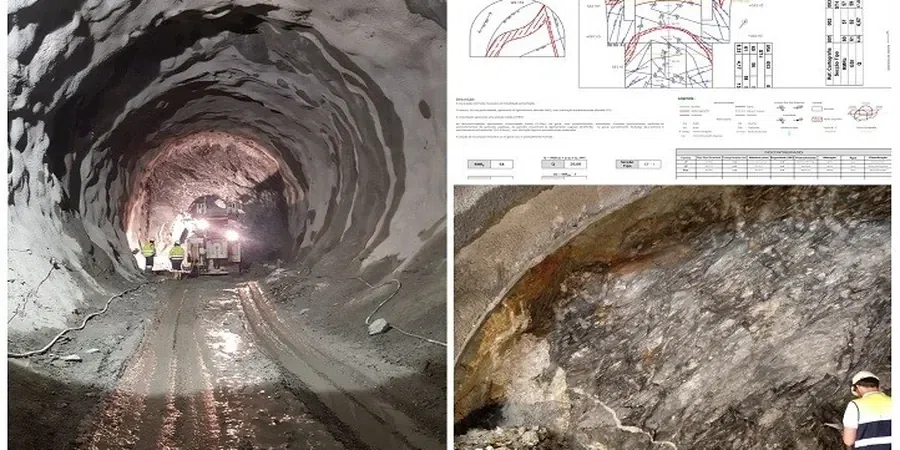
All excavation work in Australia is governed by a strict hierarchy of standards and legislation, with a primary focus on work health and safety. The cornerstone is the model Work Health and Safety (WHS) Act, adopted in New South Wales, which mandates that a person conducting a business or undertaking (PCBU) must manage risks associated with excavation work. The Safe Work Australia Code of Practice for Excavation Work provides practical guidance, defining a trench as an excavation where the depth exceeds the width, and requiring mandatory controls like benching, battering, or shielding for any trench deeper than 1.5 metres. Compliance with Australian Standard AS 2870 for residential slabs and AS 4678 for earth-retaining structures is also fundamental, ensuring that the geotechnical design of deep excavations meets national benchmarks for structural integrity and serviceability.
The scope of projects requiring specialist excavation expertise in Port Macquarie is diverse and expanding. The region's growth fuels demand for multi-storey residential and commercial developments with deep basements, where temporary shoring systems like secant pile walls or soil nail walls are critical. Major civil infrastructure, including upgrades to the Pacific Highway and the construction of new bridge abutments, relies on precisely engineered large-scale bulk earthworks. Even smaller-scale works, such as installing deep stormwater drainage or constructing inground pools on sloping sites with reactive clays, necessitate a technical approach to prevent long-term differential settlement. Throughout these projects, continuous validation is non-negotiable, achieved through dedicated geotechnical excavation monitoring programs that track ground movement, vibration, and pore water pressure in real time.
Questions and answers
What is the definition of a trench versus a general excavation under Australian regulations?
Under the Safe Work Australia Code of Practice, a trench is a specific type of excavation where the depth exceeds the width. This distinction triggers more stringent safety controls in New South Wales, such as mandatory benching, battering, or the use of trench shields for any trench 1.5 metres deep or greater, due to the heightened collapse risk in narrow, deep cuts.
What are the primary geotechnical risks when excavating in Port Macquarie's coastal soils?
The main risks stem from soft estuarine clays and unconsolidated sands with high groundwater tables. This leads to basal heave, where the excavation floor fails under hydrostatic pressure, and rapid sidewall collapse in unsupported trenches. Tidal fluctuations can also cause quick conditions in sandy layers, demanding robust dewatering and shoring designs.
When is a geotechnical investigation required before starting an excavation project?
A geotechnical investigation is mandatory for any excavation beyond a minor, shallow cut under Australian Standard AS 2870 and WHS legislation. It is essential for assessing soil strength, groundwater levels, and rock profiles to inform a safe design. Any project involving deep basements, shoring, or proximity to adjacent buildings requires comprehensive site-specific data.
What is the typical process for managing groundwater during a deep excavation?
Groundwater management typically involves a combination of perimeter cut-off walls, such as secant piles, and internal dewatering systems using vacuum or deep-well pumps. The specific method is determined by soil permeability. The goal is to lower the water table below the dig level to prevent instability, with continuous monitoring to avoid causing settlement outside the site boundary.
Location and service area
We serve projects across Port Macquarie and surrounding areas.