The difference in subgrade between a subdivision near the Hastings River floodplain and one up in the hills behind Lighthouse Beach can be extreme. One gives you silty alluvium that turns to mush after a week of rain. The other is residual clay over weathered sandstone that looks solid until you compact it and find it loses half its stiffness. This is why relying on a generic laboratory CBR test without understanding the local soil profile rarely works in Port Macquarie. Our team runs soaked and unsoaked CBR tests under AS 1289, but we always tie the result back to what we see in the field. For pavement design on coastal plains, we often pair the CBR with a grain-size distribution analysis to confirm fines content, and when the formation level sits near the water table we recommend an in-situ permeability test to anticipate drainage issues before the pavement goes down.
A laboratory CBR value without the swell curve and compaction data is just a number. The real story is how the soil behaves when it is wet, compacted, and loaded over time.
Scope of work
Area-specific notes
Port Macquarie sits on a complex mix of Permian meta-sediments, Tertiary basalts, and Quaternary alluvium. The coastal lowlands between the Hastings River and the Pacific Ocean hide layers of estuarine clay with organic content that can exceed 5%. These soils have CBR values below 2% when soaked, and they swell enough to lift a lightly loaded pavement. Up in the Thrumster and Sancrox areas, the weathered mudstone can look competent in a test pit but slake rapidly when exposed to water. A laboratory CBR test run on a sample that was not preserved at natural moisture gives a false high reading. We see this happen on rural road upgrades where the sample dries out between the site and the lab. The risk is not just rutting. It is the cost of reconstructing a failed pavement two years after handover because the design assumed a subgrade strength that never existed in the wet season. Council engineers in the Hastings region are increasingly requesting soaked CBR values with full swell data for any subdivision pavement design, and for good reason.
Standards used
AS 1289.6.1.1, AS 1289.5.2.1, Austroads Guide to Pavement Technology Part 2, TfNSW QA Specification R44
Linked services
Soaked CBR with swell
Full AS 1289.6.1.1 procedure including 4-day soak, swell monitoring, and CBR penetration on remolded specimens at specified density and moisture.
Unsoaked CBR for granular materials
Immediate CBR testing on granular basecourse and subbase materials compacted at field moisture, used for construction QA and layer acceptance.
CBR plus compaction correlation
Combined testing package linking the CBR value to a full moisture-density relationship, giving the design engineer the complete picture for pavement thickness design.
Typical parameters
Top questions
What is a laboratory CBR test and why does it matter for a Port Macquarie driveway?
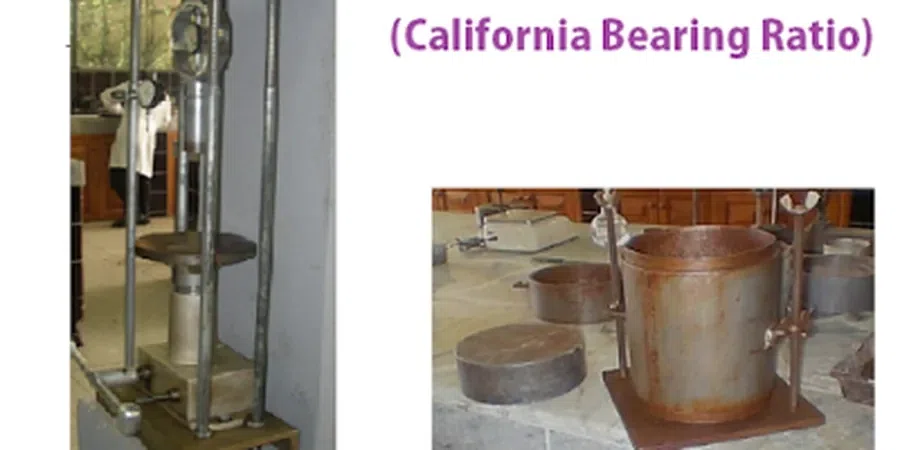
The California Bearing Ratio test measures the strength of a compacted subgrade or granular material by pushing a piston into it and comparing the resistance to a standard crushed rock. For a residential driveway in Port Macquarie, the soaked CBR tells you whether the natural ground can support traffic loads after heavy rain, or whether you need to excavate deeper and bring in select fill.
How much does a laboratory CBR test cost in Port Macquarie?
A single-point soaked CBR test with swell measurement typically runs between AU$190 and AU$330 depending on whether compaction is included and how many points are tested. A full package with modified Proctor and three CBR points for a subdivision lot will fall at the upper end of that range.
Do I need a soaked or unsoaked CBR for a council submission?
Port Macquarie-Hastings Council generally requires a 4-day soaked CBR for subgrade assessment on public roads and subdivisions. Unsoaked CBR may be accepted for granular basecourse acceptance testing during construction, but the pavement design itself must be based on soaked values to account for long-term moisture conditions in the coastal environment.
How long does the lab CBR test take from sample drop-off to report?
The standard soaked test takes 4 days of soaking plus one day for compaction and penetration, so the minimum turnaround is 5 working days. We can expedite the compaction and reporting side, but the soak period is fixed by the standard and cannot be shortened without compromising the result.
What soil types in Port Macquarie give the lowest CBR values?
The estuarine clays found along the Hastings River floodplain and around Settlement Point consistently give soaked CBR values below 2%. These soils have high plasticity and organic content, and they swell measurably during the soak. Residual clays derived from basalt weathering in the Wauchope area also test low, typically 2-4% soaked, and require stabilisation or thick pavement layers to achieve a serviceable design life.