A common misstep we see with earthmoving contractors along the Mid North Coast is treating a 6-metre cut in Port Macquarie the same way they would in inland Sydney. The ground here tells a different story. Beneath the sandy topsoils, you quickly hit interbedded layers of weathered sandstone and siltstone that can shift their behaviour dramatically within a single site, and the perched water tables common across Hastings River floodplain areas add hydrostatic pressure most standard retention systems aren't designed to handle without proper analysis. We've been called in more than once to redesign a failed soldier pile wall that was specified without accounting for the residual clay seams that weaken when saturated. Getting the in-situ permeability profile early in the investigation phase, before any shoring is ordered, makes the difference between a controlled excavation and an urgent call for remediation.
Port Macquarie's interbedded sandstone and siltstone demands excavation support designs that account for rapid strength loss when residual clay seams become saturated.
Scope of work
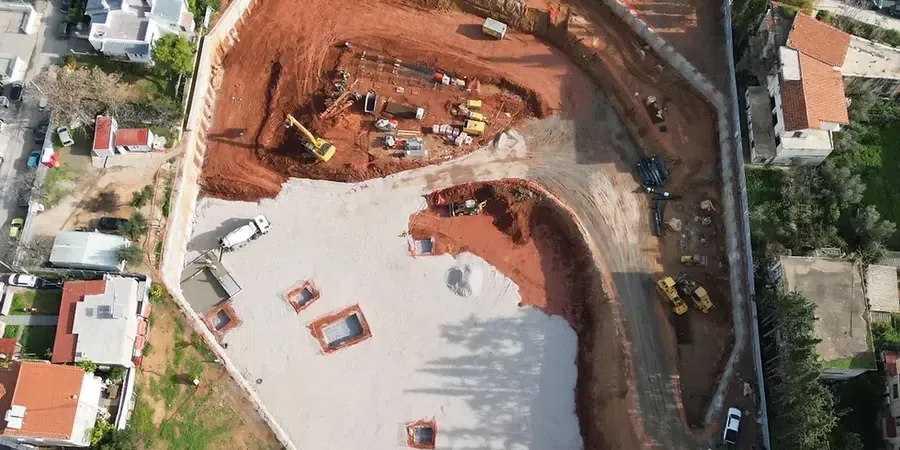
Area-specific notes
Port Macquarie sits on the southern edge of the Clarence-Moreton Basin, where Triassic to Jurassic sedimentary rocks are overlain by Quaternary estuarine clays and sands up to 15 metres thick along the Hastings River corridor. The contact zone between these soft alluvial deposits and the underlying weathered sandstone is where most excavation failures initiate, particularly when dewatering is insufficient and positive pore pressures build up behind the retaining structure. A basel slip can propagate quickly if the basal clay layer has a friction angle below 22 degrees, which we've measured in several sites near Settlement Point. Once the excavation faces drop below the tidal influence zone of the Hastings River, the hydrostatic gradient can reverse daily, subjecting temporary works to cyclic loading that fatigue tieback anchors faster than static design charts predict. Continuous inclinometer monitoring and piezometer readings every four hours during critical stages are not optional extras here; they are the minimum standard we specify to avoid a catastrophic blowout during spring tide cycles.
Standards used
AS 4678-2002: Earth-retaining structures, AS 1726-2017: Geotechnical site investigations, AS/NZS 1170.4:2021: Structural design actions - Earthquake actions
Linked services
Shoring and retention system design
Full structural design of soldier pile, secant pile, and anchored shotcrete walls compliant with AS 4678, including lateral earth pressure analysis for layered coastal profiles.
Construction-stage dewatering plans
Dewatering system specification and groundwater control strategies that account for the tidal influence of the Hastings River and perched aquifers in the sand-over-sandstone sequence.
Instrumentation and monitoring protocols
Customised monitoring plans with inclinometer trigger thresholds, piezometer reading schedules, and settlement markers tied to specific excavation stages and weather forecasts.
Typical parameters
Top questions
What is the typical cost range for a deep excavation design in Port Macquarie?
For a comprehensive design package including site investigation interpretation, shoring calculations, dewatering plans, and construction-stage monitoring protocols, engineering fees typically range between AU$3,250 and AU$13,610 depending on excavation depth, geological complexity, and the number of retained faces requiring analysis.
How does the coastal groundwater affect deep excavation design in this area?
The perched water tables within the Quaternary sands and the tidal-driven fluctuations near the Hastings River create two distinct hydrostatic regimes that must be addressed separately in the design. We incorporate dual-phase dewatering with vacuum-assisted wellpoints for the upper sand layer and deeper relief wells penetrating into the sandstone to control basal pore pressures during excavation.
What retaining wall types work best in Port Macquarie's weathered sandstone?
Soldier pile and lagging walls with post-tensioned ground anchors perform well in the moderately weathered sandstone found below 4 to 6 metres depth, as they allow rapid installation and staged prestressing. For excavations below the water table or in zones with thick residual clay, secant pile walls provide better groundwater cut-off and reduce the risk of fines migration through lagging gaps.
Do you provide construction-phase support after the design is complete?
Yes, we maintain a presence during critical excavation stages. Our team conducts regular site visits to verify that exposed ground conditions match the design assumptions, reviews instrumentation data against trigger thresholds, and can issue field adjustment memos if anchor loads or wall deflections require recalibration during the cut sequence.