In-situ testing in Port Macquarie represents a fundamental branch of geotechnical engineering that evaluates soil, rock and groundwater properties directly in their natural state, without the disturbance associated with sample extraction and laboratory transport. This category encompasses a suite of field-based investigation methods designed to capture the true mechanical behaviour and stratigraphic profile of the ground, providing engineers with reliable parameters for foundation design, earthworks control and infrastructure planning. Across the Hastings region, where coastal sands, estuarine clays and residual basaltic soils create a complex subsurface mosaic, the value of accurate field data cannot be overstated.
Port Macquarie's geology presents a challenging interface between the ancient Palaeozoic bedrock of the New England Orogen and the unconsolidated Quaternary sediments that mantle the coastal plain and river valleys. The low-lying areas around the Hastings River and Maria River catchments are underlain by soft, compressible marine and alluvial clays that can be highly sensitive to loading and prone to consolidation settlement. In contrast, the elevated headlands and hinterland slopes expose deeply weathered metasediments and basalt flows, where variable rockhead depths and residual soil profiles demand careful characterisation. This geological diversity makes a one-size-fits-all investigation approach inadequate, placing a premium on in-situ methods that can adapt to contrasting ground conditions across relatively short distances.
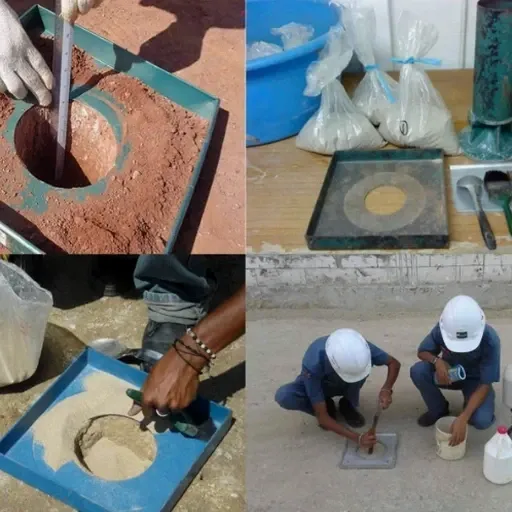
Australian practice for in-situ testing is governed by the AS 1289 series of standards, which prescribe procedures for field density, penetration testing and other site investigation activities. In New South Wales, these are reinforced by Transport for NSW specifications and the requirements of the National Construction Code, which mandate minimum investigation scopes for structural projects. The field density test (sand cone method) exemplifies this regulatory framework, providing a standardised technique under AS 1289.5.3.1 for verifying compaction levels in road embankments, building pads and trench backfill. Compliance with these standards is not merely a technical recommendation but a contractual and legal obligation for earthworks acceptance across the Mid North Coast.
The range of projects that depend on in-situ testing in Port Macquarie is broad and growing with the region's steady population expansion. Residential subdivisions on greenfield sites require comprehensive site classification to satisfy AS 2870, while medium-rise commercial developments in the CBD demand deeper investigation of founding strata and groundwater regimes. Infrastructure works, including the upgrading of the Oxley Highway and local road networks, rely heavily on compaction control testing and bearing capacity verification. Coastal protection structures, stormwater detention basins and marina developments in the Hastings estuary all present geotechnical scenarios where field testing provides the only practical means of assessing ground behaviour under anticipated service conditions.
Available services
Questions and answers
What is the purpose of in-situ testing compared to laboratory testing?
In-situ testing measures soil and rock properties in their natural state, preserving factors like stress history, moisture regime and structure that are altered during sampling. This provides more representative parameters for design, particularly in sensitive clays or loose sands common in Port Macquarie's coastal geology, where sample disturbance can lead to conservative or unconservative engineering decisions.
Which Australian standards govern in-situ testing in Port Macquarie?
The primary framework is the AS 1289 series, covering field density, penetration testing and shear strength measurement. AS 1726 provides guidance on geotechnical site investigation scope. In New South Wales, Transport for NSW supplements these with project-specific specifications, while the National Construction Code references these standards for compliance in earthworks and foundation construction.
When is in-situ testing required for a residential development in Port Macquarie?
In-situ testing is required during the site classification stage under AS 2870 to assess soil reactivity and bearing capacity, and during construction for compaction verification of fill and footings. Given the prevalence of reactive clays and variable fill in the Hastings region, field testing is essential to meet council development consent conditions and structural warranty requirements.
How do local ground conditions in Port Macquarie influence the choice of in-situ test methods?
The coastal geology demands a flexible approach: standard penetration tests are suited to the sandy profiles and residual soils of the hinterland, while cone penetration testing is preferred in the soft estuarine clays near the Hastings River. Compaction control using nuclear or sand cone methods is critical in the sandy coastal deposits where density is difficult to assess by other means.
Location and service area
We serve projects across Port Macquarie and surrounding areas.