Foundations represent the critical interface between any structure and the ground beneath it, and in Port Macquarie, this relationship demands particular attention. This category encompasses the full spectrum of below-ground engineering required to safely transfer structural loads into the earth, from initial site investigation and geotechnical assessment through to detailed design and construction methodologies. Whether for a new coastal residence, a multi-storey commercial development, or essential civil infrastructure, the integrity of the foundation system determines the long-term performance and safety of the entire project. Local conditions mean that a standard, off-the-shelf solution is rarely appropriate, making specialist input from the earliest planning stages essential.
The geology of the Port Macquarie region is a complex and highly variable tapestry that directly governs foundation design. Much of the coastal plain is underlain by Quaternary alluvial and estuarine sediments, consisting of soft, compressible clays, loose saturated sands, and layers of organic material, all of which present significant challenges for bearing capacity and settlement. Further inland, the terrain transitions to the steeply sloped, residual soils and weathered rock of the Great Dividing Range foothills, where stability and erosion are primary concerns. These conditions are compounded by the region's high water table and significant rainfall, which can saturate soils, reduce their strength, and create aggressive chemical environments that attack concrete and steel. A robust geotechnical investigation is not merely a precaution; it is the non-negotiable first step in understanding a site's specific ground profile.
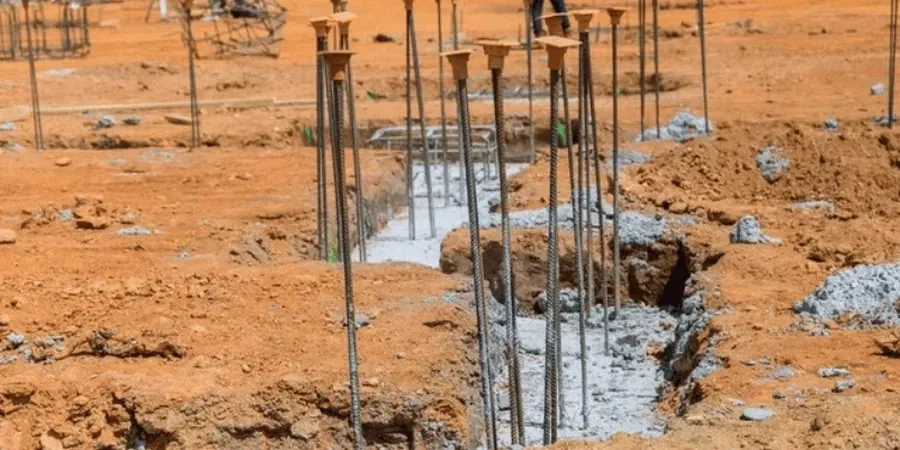
All foundation work in Port Macquarie is governed by the National Construction Code (NCC), which mandates compliance with Australian Standard AS 2870 for residential slabs and footings, and AS 2159 for the design and construction of piled foundations. These standards classify sites based on soil reactivity and expected movement, from stable Class A sites to highly reactive Class E or problem-filled Class P sites, which are common locally due to the prevalence of soft and variable soils. For larger projects, AS 4678 for earth-retaining structures and AS 5100 for bridge foundations may also apply. These are not just guidelines but legally enforceable requirements that dictate design parameters, material durability, and construction inspection protocols, particularly for deep foundations where the risks of non-compliance are highest.
The types of projects requiring engineered foundations in this area are diverse. A lightweight dwelling on a flat, sandy site might be adequately supported by a conventional stiffened raft slab, but a multi-storey apartment complex or a waterfront structure will almost certainly require a deep foundation solution. This is where services like pile foundation design become critical, transferring loads through weak surface layers to competent rock or dense sands at depth. Similarly, commercial and industrial buildings with heavy floor loads, retaining walls for hillside developments, and infrastructure such as bridge abutments and wharf structures all demand a bespoke approach. Even renovations and extensions to existing buildings require careful assessment to ensure new loads do not compromise the original footings or cause differential settlement.
Available services
Questions and answers
Why is a geotechnical investigation so important before designing foundations in Port Macquarie?
The local geology is highly variable, with soft coastal clays, loose sands, and reactive soils all common. A geotechnical investigation, mandated by AS 2870 and AS 2159, identifies the specific soil profile, strength, and water table depth, providing the essential data needed to design a safe and economical foundation and avoid unexpected ground conditions during construction.
What Australian Standards regulate foundation design and construction?
The primary standards are AS 2870 for residential slabs and footings, which classifies sites based on soil reactivity, and AS 2159 for piling, which covers the design and installation of deep foundations. For commercial, industrial, and infrastructure projects, additional standards such as AS 4678 (retaining walls) and AS 5100 (bridges) apply, ensuring all work meets national safety and durability requirements.
When is a deep foundation like a piled system necessary instead of a standard slab?
Deep foundations are required when near-surface soils lack the strength to support structural loads without excessive settlement. This is typical on Port Macquarie's soft alluvial and estuarine sites, for structures with high concentrated loads, or where a high water table exists. Piling bypasses these weak layers to transfer loads to a deeper, competent bearing stratum like rock or dense sand.
How do local coastal conditions affect the durability of a foundation?
Coastal conditions expose foundations to a high water table, potential saltwater ingress, and sulphate-rich soils, which can chemically attack concrete and corrode steel reinforcement. Australian Standards mandate specific concrete exposure classifications and protective measures, such as increased cover to reinforcement and the use of sulphate-resistant cement, to ensure the foundation achieves its intended design life in this aggressive environment.
Location and service area
We serve projects across Port Macquarie and surrounding areas.